
InFlectis BioScience awarded $650K grant from the National Multiple Sclerosis Society to advance IFB-048 preclinical development in Multiple Sclerosis; Research to be Performed by Prof. Popko of Northwestern University

Key Takeaways

  • InFlectis Bioscience has been awarded a $650K grant from the National Multiple Sclerosis Society’s commercial research initiative Fast Forward to demonstrate preclinical efficacy of its lead MS candidate, IFB-048.
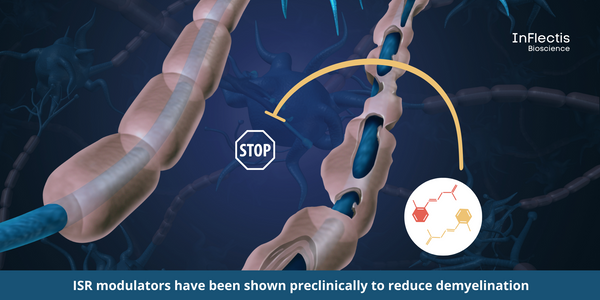
  • IFB-048 is a part of a new class of compounds called ISR modulators, which aim to protect the cells that support and repair neurons damaged by MS and other neurological and autoimmune conditions.
  • IFB-048 parent drug has demonstrated potential to protect oligodendrocytes and/or neurons and to enhance remyelination of neurons in an inflammatory environment in multiple sclerosis preclinical models.

Nantes, France – April 30th, 2024 - InFlectis BioScience, a pioneer in developing first-in-class therapies for neuromuscular diseases, announces that it has been awarded a $649,601 grant from the National MS Society’s commercial research initiative Fast Forward to advance IFB-048 preclinical development in Multiple Sclerosis (MS).

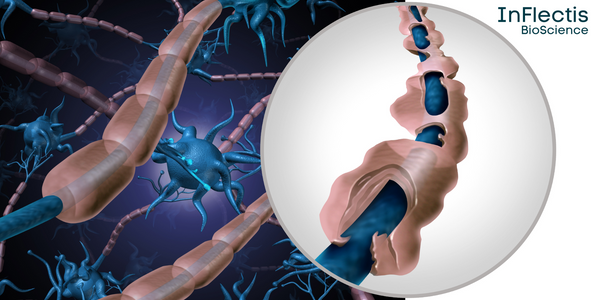
No cure for MS is known. Available treatments attempt to reduce the incidence and the severity of new lesions on the myelin sheath by limiting the activity and availability of immune cells. This manifests clinically through reductions in relapse rates and the progression of disability. As inflammatory events accumulate, remissions (the period when symptoms dissipate) become less common, however cells that can repair lesions lose function. Consequently, there is an urgent need for new treatments that protect myelin and enhance remyelination to preserve axonal integrity and increase clinical function of people with MS.

The goal of InFlectis’ approach is to protect the cells that maintain and repair the myelin sheath, the oligodendrocytes, from death induced by inflammation. Prof. Popko’s laboratory at Northwestern University has identified a pathway inside the cell, named Integrated Stress Response (ISR), which upon activation by chemical compounds such as guanabenz and IFB-088/sephin1, is able to protect oligodendrocytes and myelin.

Prof. Brian Popko, PhD, Scientific Director of the Division of Multiple Sclerosis and Neuroimmunology in the Department of Neurology at Northwestern University Feinberg School of Medicine that will be collaborating with InFlectis, commented: “We have evaluated in a clinical trial in people with MS a first-generation compound able to boost the ISR. This compound, guanabenz, is an FDA-approved anti-hypertensive drug tailored for cardiovascular disease and not optimal for targeting MS. InFlectis identified a derivative of guanabenz, IFB-048, which eliminates the hypotensive properties of guanabenz with potentially greater potency for targeting the ISR. In animal models of MS, we confirmed that another guanabenz-related compound, IFB-088, was able to protect oligodendrocytes and myelin against the inflammatory environment.”

InFlectis’s CEO, Pierre Miniou, Ph.D., explained, “This grant along with the support from the Society are a testimony to the potential of IFB-048 in Multiple Sclerosis. This project is an opportunity to speed-up the development of a promising drug candidate, which could constitute a paradigm shift for the benefit of people with MS.”

The National MS Society, a leading advocate in the fight against MS, recognizes the potential of InFlectis' technology and approach in the battle against this devastating disease. Walter Kostich, Ph.D., Associate Vice President, Translational Research at the Society, echoed Pierre Miniou's sentiments, stating, "We look forward to the results of these experiments, and hope that IFB-048 continues to show promise for promoting myelin repair and stopping MS progression in its tracks."

This project funded by the National MS Society aims to demonstrate that IFB-048 can protect oligodendrocytes and/or neurons and to enhance the remyelination of neurons in an inflammatory environment in validated MS mice models. The distribution of IFB-048 in the animal brain and spinal cord will be evaluated together with its metabolic properties.

About Multiple Sclerosis

Multiple sclerosis is an unpredictable disease of the central nervous system. Currently there is no cure. Symptoms vary from person to person and may include disabling fatigue, mobility challenges, cognitive changes, and vision issues. An estimated 1 million people live with MS in the United States. Early diagnosis and treatment are critical to minimize disability. Significant progress is being made to achieve a world free of MS.

About InFlectis BioScience
InFlectis is developing first-in-class therapies for neuromuscular diseases and is currently evaluating in clinic an orally available small molecule, named IFB-088 (icerguastat) that has the potential to extend lives or improve the quality-of-life for people suffering from Amyotrophic Lateral Sclerosis (ongoing phase II clinical trial) and demyelinating diseases like Charcot-Marie-Tooth disease (phase 2 ready package). 
 
About Northwestern University
The Ken & Ruth Davee Department of Neurology at Northwestern University provides students, residents and fellows with innovative learning opportunities to build their skills, provide evidence-based clinical care through hospital affiliates, and develop new treatments through multidisciplinary research. 
Based in the Feinberg School of Medicine at Northwestern University and allied with the Northwestern Medicine healthcare system, the program is poised to raise the standard of neurological research and care thanks to close collaboration with research partners as well as colleagues in neurological surgery, neuroradiology and related disciplines.
 
About the National Multiple Sclerosis Society
The National MS Society, founded in 1946, is the global leader of a growing movement dedicated to creating a world free of MS. The Society funds cutting-edge research for a cure, drives change through advocacy and provides programs and services to help people affected by MS live their best lives. Connect to learn more and get involved: nationalMSsociety.org, Facebook, X, formerly known as Twitter, Instagram, YouTube or 1-800-344-4867.
 

Key Takeaways

  • InFlectis Bioscience has been awarded a $650K grant from the National Multiple Sclerosis Society’s commercial research initiative Fast Forward to demonstrate preclinical efficacy of its lead MS candidate, IFB-048.
  • IFB-048 is a part of a new class of compounds called ISR modulators, which aim to protect the cells that support and repair neurons damaged by MS and other neurological and autoimmune conditions.
  • IFB-048 parent drug has demonstrated potential to protect oligodendrocytes and/or neurons and to enhance remyelination of neurons in an inflammatory environment in multiple sclerosis preclinical models.

Media Gallery

Quotes

“
We look forward to the results of these experiments, and hope that IFB-048 continues to show promise for promoting myelin repair and stopping MS pr...
Walter Kostich, Ph.D. — Associate Vice President, Translational Research, National Multiple Sclerosis Society
“
In animal models of MS, we confirmed that...IFB-088, was able to protect oligodendrocytes and myelin against the inflammatory environment.
Brian Popko — PhD, Scientific Director, Division of Multiple Sclerosis and Neuroimmunology, William Frederick Windle Professor of Neurology, Northwestern Feinberg School of Medicine
“
This project is an opportunity to speed-up the development of a promising drug candidate, which could constitute a paradigm shift for the benefit o...
Pierre MINIOU, PhD, MBA — Co-Founder, President & CEO 

Related Bios

Pierre MINIOU, PhD, MBA
Co-Founder, President & CEO 
Dr Pierre Miniou has over 20 years of international experience in business development and licensing in the biopharmaceutical industry with the signing of many partnering and license agreements. He has experience of senior management having been the head of the patent department of Pierre Fabre Laboratories, a member of the Executive Committee of Vivalis (now Valneva) and Director of Vivalis Toyama (Japan).

Pierre holds a Master’s degree and Engineering degree in Biotechnology from the School of Biotechnology of Strasbourg and a PhD in Molecular and Cellular Biology from the Louis Pasteur University of Strasbourg. He is also graduated from the CEIPI (Centre for International Studies of Industrial Property) in Strasbourg and holds a MBA (Audencia, Nantes).

He worked as a researcher at Transgene (Strasbourg), the Wistar Institute (Philadelphia, PA), the Necker Hospital (Paris) and the IGBMC (Strasbourg). He then left the laboratory activities to join the law firm Cabinet Regimbeau (Paris) prior to join Pierre Fabre Laboratories and in 2003 he moves to Vivalis (today Valneva) as Director of Business Development and Director of Intellectual Property. In 2013, he co-founded InFlectis BioScience with Philippe Guedat.
View Full Bio>>
Brian Popko
PhD, Scientific Director, Division of Multiple Sclerosis and Neuroimmunology, William Frederick Windle Professor of Neurology, Northwestern Feinberg School of Medicine
Brian Popko graduated from Penn State University in 1980 with a BS degree in Microbiology and Immunology, and in 1984 received his PhD degree in Microbiology and Immunology from the University of Miami School of Medicine. Subsequently, he did a postdoctoral fellowship with Dr. Leroy Hood at Caltech where his interest in myelinating glial cells developed. Dr. Popko started his own laboratory in the Neuroscience Center at the University of North Carolina at Chapel Hill in 1988, where he stayed until moving to the Department of Neurology at the University of Chicago in 2002. At the University of Chicago, Dr. Popko was the Jack Miller Professor in Neurological Disorders, the Director of the Center for Peripheral Neuropathy, and the Associate Chair for Research in the Department of Neurology. In 2020, Dr. Popko moved to Northwestern University Feinberg School of Medicine, where he is the Scientific Director of the Division of Multiple Sclerosis and Neuroimmunology and the William Frederick Windle Professor of Neurology.

Over the past three decades, the Popko lab has made important contributions to our understanding of myelinating glial cell development, the lipid and protein components of the myelin sheath, the role of the myelination process in establishing axonal domains, the importance of endoplasmic reticulum stress on the viability and function of oligodendrocytes, as well as the influence of the immune system on myelinating cells. The lab has been focused on the generation and analysis of mouse models. In addition to contributing to a basic understanding of the myelination process, the studies conducted in the Popko Lab have provided critical insight into disease processes that functionally disrupt this critical component of the nervous system.
View Full Bio>>
Walter Kostich, Ph.D.
Associate Vice President, Translational Research, National Multiple Sclerosis Society
Drug discovery biologist and program leader with background in Multiple Sclerosis, Psychiatric disorders, Alzheimer’s disease and neuropathic pain research. Program leadership experience from target identification to selection of clinical candidate. Broad drug discovery knowledge and strong communication and project management skills. Experience spans target classes and treatment modalities. Particular depth in G protein coupled receptor (GPCR) pharmacology.
View Full Bio>>

Contacts

Pierre Miniou
pierreminiou@inflectisbioscience.com
Co-Founder, President and CEO